A customer’s relationship with a product often begins long before a purchase decision is made. A person may notice an item in an advertisement, encounter it on a store shelf, see it in a social media post, or come across it while searching online. At this early stage, the objective is usually simple: attract attention and make the product recognizable.
But recognition is only the beginning.
Once curiosity develops, customers start looking for information. They want to understand what the product offers, how it looks, how it works, and whether it fits their needs. Traditional digital commerce has become very good at supplying this information through photographs, descriptions, reviews, videos, and specifications.
The next opportunity is to move beyond awareness and information toward interaction.
Instead of asking customers only to look at a product, brands can give them opportunities to examine it, explore it, and understand it through more active digital experiences. This creates a progression from simply knowing that a product exists to developing a clearer sense of what it could be like to experience that product.
Awareness Is Only the Opening Moment
Product awareness is valuable because customers cannot consider products they do not know exist. Advertising, search results, social media, retail displays, packaging, and recommendations all contribute to making products visible.
Yet visibility alone does not answer the questions that emerge after initial attention.
A customer who notices a new chair may immediately wonder about its size. Someone discovering a new electronic device may want to see its physical design from multiple angles. A shopper considering home décor may want to understand how an item could look in their own space.
These questions mark the transition from awareness to investigation.
Digital shopping can support that transition by offering content that does more than introduce the product. Instead of stopping at an attractive photograph or short description, brands can provide interactive ways for customers to continue exploring.
The experience becomes less about getting attention and more about sustaining curiosity.
Physical Marketing Can Start the Interaction
The path from awareness to interaction does not have to begin on an e-commerce website.
Many product discoveries still happen in physical environments. Customers encounter products on shelves, packages, posters, displays, brochures, catalogs, and event materials. These surfaces can introduce a product effectively, but their physical dimensions limit how much information they can contain.
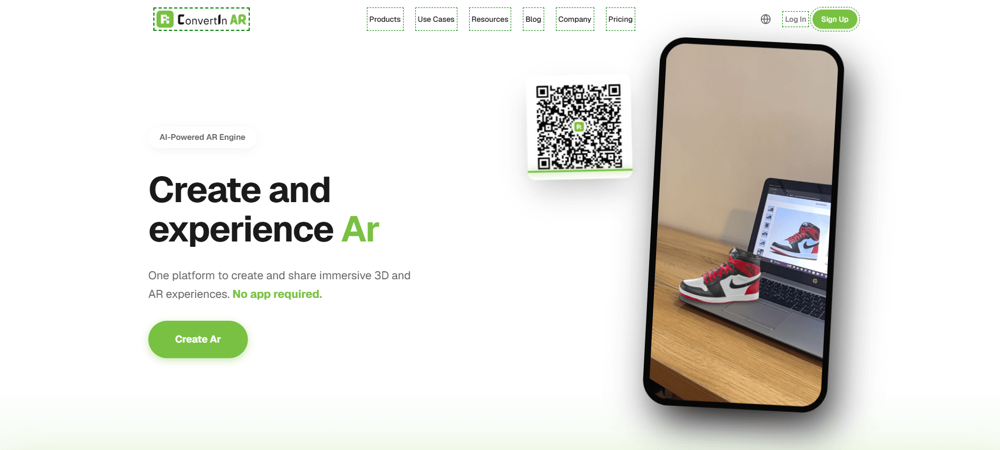
A augmented reality qr code can help connect the physical introduction with a richer digital experience.
A customer can encounter a product in the real world, scan the code with a smartphone, and continue exploring through a browser. The printed surface remains relatively simple while the connected digital experience can provide additional product information and interaction.
This creates a natural progression.
The physical material creates awareness. The scan creates access. The digital experience creates an opportunity for deeper exploration.
Rather than separating physical marketing from digital commerce, brands can allow the two to work together.
Curiosity Creates the Need for Better Product Content
Once a customer becomes interested in a product, the nature of their questions changes.
They are no longer asking only, “What is this?”
They may start asking, “What does it actually look like?” “How big is it?” “Will it work in my space?” “What does the back look like?” or “How does this version compare with another one?”
These questions require a different type of content.
A product description can answer some of them. A photograph can answer others. A video may demonstrate movement or use. But customers sometimes need the freedom to decide what they want to examine.
This is where interactive product visualization becomes valuable.
Instead of presenting one carefully selected view, brands can create experiences that allow customers to explore products more independently.
Interaction Gives Customers More Control
There is a fundamental difference between watching a product demonstration and interacting with a product representation.
A demonstration follows a predetermined sequence. The creator decides what the customer sees.
Interaction gives some of that control to the customer.
A shopper can rotate a product, inspect a particular surface, change their viewing angle, or explore an object in a different context. The customer is no longer limited to the perspectives chosen for a conventional product gallery.
This does not make traditional content unnecessary. Rather, it gives shoppers another way to use it.
Some customers may only need a few photographs. Others may want to spend several minutes examining a product. An interactive experience can accommodate both behaviors without forcing every visitor through the same process.
Turning Existing Images Into New Digital Possibilities
Businesses often have years of investment in product photography.
Images may already be available for online stores, printed catalogs, advertising campaigns, marketplaces, social media, and sales materials. Creating entirely new digital assets for every product can therefore seem like a major undertaking.
New image-based workflows can change that calculation.
Technologies that convert image to 3D model provide a pathway for transforming static visual assets into more interactive representations. Instead of treating existing photographs as finished content, businesses can explore how those assets might contribute to three-dimensional product experiences.
This can be particularly relevant for companies managing extensive catalogs.
If a brand sells hundreds or thousands of products, manually creating new interactive content for each item may be difficult to scale. More accessible image-to-3D workflows can potentially make visualization available across a larger portion of the catalog.
The significance lies in the workflow as much as the technology. Existing product content can become a resource for future experiences rather than something that must be discarded and recreated.
Three-Dimensional Content Changes Product Examination
A three-dimensional product representation gives customers a different way to investigate an object.
Instead of comparing several photographs to construct an idea of its shape, customers can interact with a single representation from multiple viewpoints.
This can make certain characteristics easier to understand.
The shape of a curved object, the relationship between different components, the depth of a product, or the proportions of a physical item can become more apparent when customers are able to view it dynamically.
This is particularly useful for products where visual form plays an important role in the decision.
The experience does not need to replace specifications. Accurate dimensions and technical information remain essential. Instead, interactive visualization can provide a visual layer that helps customers interpret those details.
Moving the Product Into a Familiar Environment
Product interaction becomes even more meaningful when the customer can consider the product within a relevant setting.
A product shown against a neutral background provides a clear view of the item. But customers often need to imagine what happens after the purchase.
Where will it go?
What will it look like beside existing objects?
Does its size feel appropriate?
Interactive spatial experiences can help customers consider these questions visually.
This can be especially valuable for furniture, home accessories, appliances, décor, and other products whose suitability depends partly on physical surroundings.
Rather than requiring customers to mentally transport the product from a website into their environment, digital experiences can help bring the product representation closer to the context in which it may eventually be used.
Product Pages Can Support Different Levels of Engagement
Not every shopper wants the same amount of interaction.
Some visitors are simply checking a price. Others are comparing options. Some are conducting detailed research before making a significant purchase.
A well-designed digital product experience can support these different levels without creating unnecessary friction.
Basic information should remain easy to access. Interactive features can then provide additional depth for customers who want it.
This layered approach is important because adding more features should not make a product page harder to use.
Interaction works best when it is optional, understandable, and directly connected to customer needs.
The shopper decides whether to explore further.
Awareness Can Continue Across Multiple Channels
A customer may discover a product in one place and investigate it somewhere else.
They might see an advertisement on the way to work, search for the product later, encounter it in a store, and eventually revisit the brand's website from home.
This fragmented journey creates an opportunity for connected product experiences.
A physical package can lead to a browser-based experience. A showroom display can connect to an interactive model. A digital advertisement can send customers to a product page where visualization continues.
The goal is not to make every channel identical.
Instead, each channel can perform a different role while contributing to the same product story.
Awareness can happen almost anywhere. Interaction can continue wherever the customer has access to the digital experience.
Product Interaction Can Improve Digital Education
Interaction is not only a way to create engagement. It can also help customers learn.
Some products require explanation because their design, structure, or functionality is not immediately obvious.
An interactive model can allow customers to inspect relationships that might otherwise require lengthy explanations.
For example, a product with several physical components can be easier to understand when customers can examine how those components relate spatially. A product with a distinctive shape can be easier to appreciate when viewed from multiple angles.
This makes interactive visualization a potential educational tool.
The customer does not have to depend entirely on written explanations. They can learn through observation and exploration.
The Same Shift Is Happening With Other Digital Information
The move from static information toward interaction is visible across many industries.
Businesses are finding ways to make information more visual, contextual, and participatory.
Food and hospitality provide a simple example. augmented reality menus can introduce interactive or visual elements to the process of choosing a dish, giving customers information in a format that goes beyond conventional menu descriptions.
The broader principle can apply to many types of information.
Whenever customers need to understand something before making a decision, interactive content can provide another route to that understanding.
The product itself does not have to be the only object of exploration. The surrounding information can become interactive as well.
Removing Friction From the Journey
A product experience can be highly advanced and still fail if accessing it is difficult.
Customers generally do not want technology to become an obstacle between curiosity and information. They want the quickest practical route to the answer they are looking for.
This is why browser-based experiences can be valuable.
When customers can use familiar devices and simple links or scanning behaviors, the interactive layer becomes easier to incorporate into an existing shopping journey.
The experience should feel like an extension of product research rather than a separate activity.
That distinction can influence adoption. The more naturally interaction fits into the customer's existing behavior, the more likely it is to become part of normal product discovery.
From Looking to Investigating
The transition from awareness to interaction represents a meaningful change in digital product communication.
Awareness makes customers notice a product. Information helps them understand its basic characteristics. Interaction gives them the freedom to investigate further.
Each stage serves a different purpose.
A product photograph can create interest. A description can establish context. Reviews can provide outside perspectives. Specifications can provide precision. Interactive visualization can add another dimension by allowing customers to examine the product themselves.
This combination creates a more complete discovery process without requiring every customer to engage with every available feature.
Interaction Can Become Part of the Brand Experience
The way customers explore a product can influence how they perceive the broader shopping experience.
A brand that gives customers useful tools for understanding its products is communicating more than product information. It is also demonstrating an approach to digital service.
Interactive experiences can make a website feel more responsive to customer curiosity. Physical materials can become more useful when connected to digital content. Product photography can contribute to richer visualization workflows.
Together, these elements can create a consistent experience across different customer touchpoints.
The product remains at the center, but the way customers access information around it becomes more flexible.
What Comes After Product Awareness?
Product awareness will always matter. Customers need to discover products before they can evaluate them.
But awareness alone is no longer the full story of digital discovery.
As shoppers become comfortable interacting with visual content, businesses can move toward experiences that allow customers to investigate products rather than simply observe them.
This does not require every brand to turn its entire catalog into an elaborate digital environment. Even focused interactions can make product information more useful.
The important shift is to recognize that customers may want to participate in the discovery process.
They may want to decide which angle to examine, which feature to investigate, or how a product could fit into their own surroundings.
That freedom can make digital shopping feel more informative without making it more complicated.
A More Interactive Stage of Digital Commerce
The evolution from product awareness to product interaction is ultimately about giving customers more control over how they understand what they are considering.
Digital commerce began by making products searchable. It then became increasingly visual, informative, social, and personalized. Interactive visualization adds another possibility: allowing customers to actively investigate products before committing to a purchase.
The technology behind these experiences may continue to change, but the customer need is straightforward.
People want to understand products before they buy them.
The more effectively digital experiences help them do that, the less dependent they are on imagination alone.
Product discovery can therefore become more than finding and viewing an item. It can become a process of examination, experimentation, and contextual understanding.
The journey begins with awareness, but interaction can give that journey greater depth. As digital product experiences continue to evolve, the distance between seeing a product and truly exploring it may become increasingly small.